Granny Flat Designs & Floor Plans: Studio to 3-Bedroom Layouts
Explore granny flat designs from studio to 3-bedroom layouts. Floor plan ideas for 25-80 sqm, tips for natural light, open-plan living and accessibility.
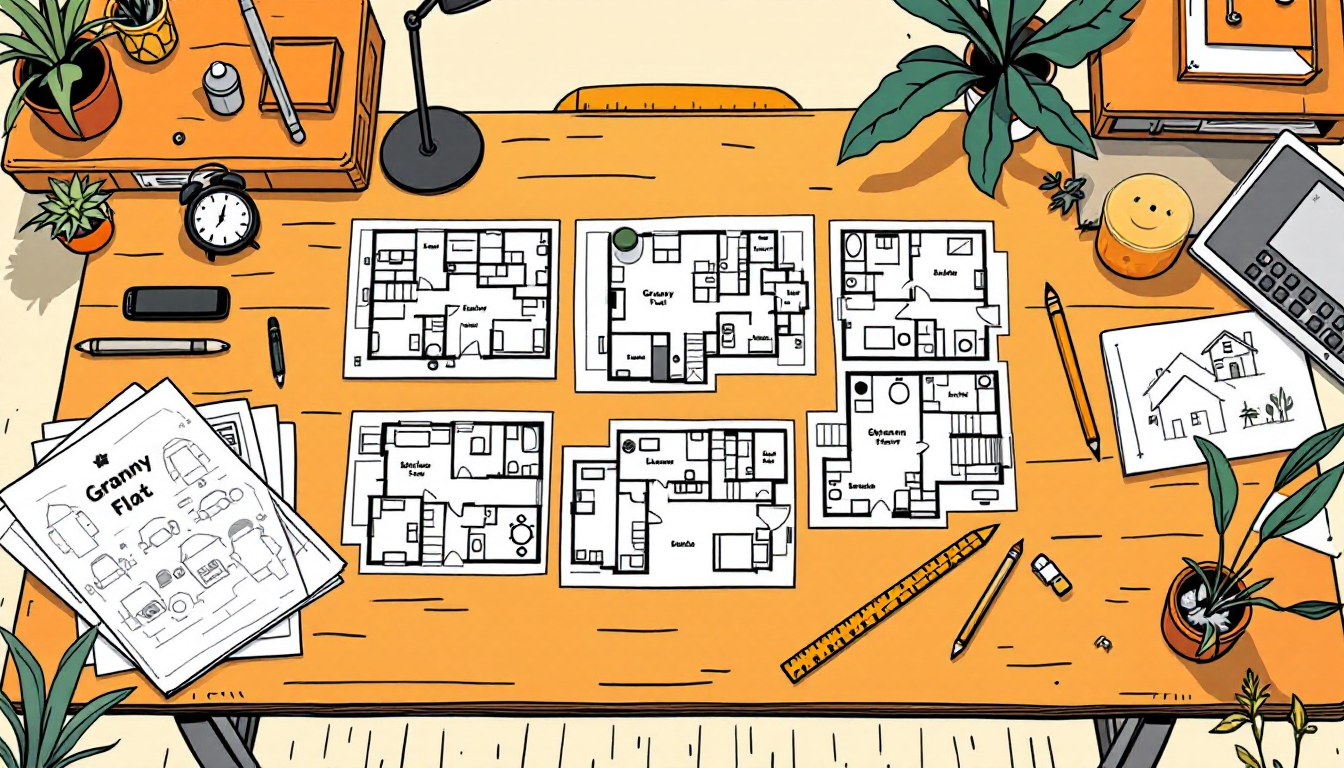
TL;DR: The right granny flat floor plan depends on your available space, state size limits and intended use. Studios (25-35 sqm) suit singles or couples wanting a compact retreat. One-bedroom layouts (35-50 sqm) are the most popular for long-term independent living. Two-bedroom designs (50-60 sqm) maximise rental income and family flexibility. Three-bedroom builds (60-80 sqm) are possible in QLD and other states with higher size caps. Smart design choices around orientation, open-plan living and kitchen/bathroom placement can make even the smallest granny flat feel spacious.
Key takeaways
- Studio layouts (25-35 sqm) work best as home offices, guest suites or short-term accommodation. Keep the bathroom in one corner and the kitchenette along one wall to maximise open floor space.
- One-bedroom layouts (35-50 sqm) are the most popular choice for independent living. A single internal wall creates a private bedroom while keeping the living area open and light.
- Two-bedroom layouts (50-60 sqm) are ideal for rental income or accommodating a small family. Place bedrooms at opposite ends for privacy.
- Three-bedroom layouts (60-80 sqm) are only possible in states allowing larger builds (QLD up to 80 sqm, ACT up to 90 sqm). These approach small house proportions.
- Orientation matters: position living areas to face north (in southern Australia) for winter sun and summer shade.
- Use the grannyflatcost.com calculator to estimate costs for your preferred design and size.
Size limits by state
Before choosing a floor plan, check what your state allows. These limits determine the maximum gross floor area (GFA) for a secondary dwelling.
| State / Territory | Max GFA | Notes |
|---|---|---|
| NSW | 60 sqm | CDC pathway; larger with full DA |
| VIC | 60 sqm | Small second dwelling; no planning permit in most cases |
| QLD | 80 sqm (BCC), varies by council | Up to 100 sqm on rural lots |
| WA | 70 sqm | Ancillary dwelling provisions |
| SA | 60 sqm | Dependent accommodation rules |
| TAS | 60 sqm | Proposed increase to 90 sqm (2026) |
| ACT | 90 sqm | Secondary residence provisions |
| NT | Varies | Check local planning scheme |
These limits typically include internal habitable area only. Verandahs, patios and carports are usually excluded from the GFA calculation, though this varies by jurisdiction.
Studio floor plans (25-35 sqm)
Studios are the most compact granny flat option. They combine living, sleeping and cooking in a single open space with a separate bathroom.
Who they suit
- Home office or creative studio with occasional overnight use
- Guest accommodation
- Short-term or Airbnb rental
- Single person downsizing
Design principles for studios
Keep the bathroom compact and in one corner. A 3-4 sqm bathroom with a walk-in shower, toilet and vanity is sufficient. Position it in a corner to minimise plumbing runs and free up the main space.
Run the kitchenette along one wall. A linear kitchen with sink, cooktop, under-bench fridge and overhead storage takes up roughly 2.5m of wall length. L-shaped or U-shaped kitchens eat into your living space in a studio — avoid them.
In taller-ceiling designs, a mezzanine sleeping platform can free up the entire floor for living. A curtained sleeping alcove is a simpler alternative that provides privacy without a full wall.
Generous glazing on the longest wall makes a real difference. A wall of sliding doors or large windows facing a private courtyard makes a 30 sqm studio feel twice its size.
Sample studio layout (30 sqm)
- Dimensions: 6m x 5m
- Bathroom: 2m x 1.8m (rear corner)
- Kitchenette: 2.5m linear run along one wall
- Living/sleeping: open space with sliding glass doors to a covered deck
- Storage: built-in wardrobe niche (1.2m wide) near the bathroom wall
1-bedroom floor plans (35-50 sqm)
The one-bedroom layout is the most popular granny flat design for permanent, independent living. It offers a dedicated sleeping space with privacy while keeping the living and kitchen area open and light.
Who they suit
- Ageing parents wanting to live close but independently
- Adult children saving for their first home
- Long-term rental tenants (singles or couples)
- Downsizers wanting low-maintenance living
Design principles for 1-bedroom
Position the bedroom at the quietest end, away from the main house and any street noise. It should have its own window for ventilation and natural light.
An open-plan living/kitchen/dining area should occupy roughly 40-50% of the total floor area. This is the heart of the granny flat, and an open-plan layout makes 40 sqm feel far more generous than divided rooms.
A bathroom positioned between the bedroom and living area keeps plumbing runs short and provides convenient access from both zones. A standard bathroom (3.5-4.5 sqm) with a walk-in shower is more practical than a bath in a small dwelling.
Even in a small granny flat, a small entry zone — a bench seat and hooks for keys — prevents the front door from opening directly into the living area. It is a small detail that makes a real difference to how finished the space feels.
Sample 1-bedroom layout (45 sqm)
- Dimensions: 9m x 5m
- Bedroom: 3m x 3.5m (10.5 sqm) with built-in wardrobe
- Bathroom: 2.4m x 1.8m (4.3 sqm) with walk-in shower
- Kitchen: L-shaped, 2.4m x 2.4m with full-size fridge, oven and dishwasher
- Living/dining: 4m x 4.5m (18 sqm) open plan
- Entry: small hallway with linen cupboard
- Outdoor: 2m covered verandah along the front
2-bedroom floor plans (50-60 sqm)
Two-bedroom granny flats are the sweet spot for rental income, family use and resale value. Fitting two bedrooms plus a functional kitchen, bathroom and living area into 60 sqm requires careful planning.
Who they suit
- Rental investment (highest demand configuration)
- Small families (parent with one child)
- Housemates sharing accommodation
- Multi-generational families needing space for two people
Design principles for 2-bedroom
The “bookend” layout works well here — bedrooms at each end of the building with the living area, kitchen and bathroom in the middle. This maximises acoustic privacy between occupants.
One bathroom is sufficient at 60 sqm. A well-designed bathroom with a walk-in shower, toilet and vanity basin serves two occupants without issues. A second toilet is a luxury that only makes sense above 55 sqm if you can genuinely spare the space.
Resist the temptation to make bedrooms larger at the expense of the living room. Bedrooms of 8-10 sqm each — enough for a double bed and wardrobe — are adequate. A 15-18 sqm open-plan living/kitchen/dining area is what makes the home feel livable day-to-day.
For the kitchen, a galley or L-shaped layout along one wall (3m run) with overhead and under-bench storage provides full functionality without consuming floor area.
Sample 2-bedroom layout (60 sqm)
- Dimensions: 10m x 6m
- Bedroom 1: 3m x 3m (9 sqm) with built-in wardrobe
- Bedroom 2: 3m x 2.7m (8.1 sqm) with built-in wardrobe
- Bathroom: 2.4m x 2m (4.8 sqm) with walk-in shower and separate toilet
- Kitchen: L-shaped, 2.4m x 3m with full appliances
- Living/dining: 4.5m x 4m (18 sqm) open plan
- Laundry: European-style concealed in hallway cupboard
- Entry/hallway: central spine connecting bedrooms to living
3-bedroom floor plans (60-80 sqm)
Three-bedroom granny flats approach small house proportions and are only possible where state and council regulations allow builds above 60 sqm. In Queensland (BCC), you can build up to 80 sqm. The ACT allows up to 90 sqm.
Who they suit
- Small families
- Multi-generational households
- Premium rental properties
- Properties in QLD, ACT or rural zones with higher size caps
Design principles for 3-bedroom
Accept smaller bedrooms going in. In a 75 sqm build with three bedrooms, individual rooms will be 7-9 sqm each — comfortable with built-in storage, but not for king-sized beds.
At this size, two bathrooms become practical, and they significantly improve livability for families. A main bathroom and an ensuite (or at least a second toilet) is worth planning for.
With three bedrooms, an open-plan design for the remaining living space is essential to stop the building feeling cramped. A combined kitchen/living/dining area of 20+ sqm anchors the design.
Sample 3-bedroom layout (75 sqm)
- Dimensions: 12.5m x 6m
- Bedroom 1 (master): 3m x 3m with built-in wardrobe, ensuite access
- Bedroom 2: 3m x 2.5m with built-in wardrobe
- Bedroom 3: 2.7m x 2.5m with built-in wardrobe
- Main bathroom: 2.4m x 2m
- Ensuite/powder room: 1.5m x 2m
- Kitchen: U-shaped, full-size with island bench
- Living/dining: 5m x 4.5m (22.5 sqm) open plan
- Laundry: separate small room (1.5m x 1.5m)
How to maximise natural light
Natural light is the single most important factor in making a small dwelling feel spacious.
Orientation
In southern Australia, north-facing living areas receive the most winter sun while being easy to shade in summer with eaves or pergolas. In Brisbane and tropical regions, east-facing living areas capture morning light while avoiding harsh afternoon western sun.
Windows and doors
Sliding glass doors on the longest wall create a visual connection to the outdoors and flood the interior with light. Clerestory windows — high-level windows near the ceiling line — bring light deep into the building without sacrificing wall space for furniture. Corner windows at the junction of two walls eliminate the darkest corner of a room.
Avoid placing bathrooms and storage on the northern wall. These spaces do not need natural light and are better positioned on the south or against the boundary wall. Light-coloured interiors (white or pale walls, light timber floors) reflect natural light and make spaces feel larger.
Open-plan vs divided layout
Open-plan
Open-plan makes small spaces feel larger, improves natural light flow and allows flexible furniture arrangement. The trade-off is limited acoustic privacy between kitchen and living, cooking smells that travel freely, and a space that can feel bare without thoughtful furniture placement.
Open-plan works best for studios, 1-bedroom layouts, and the living/kitchen zone of 2-bedroom designs.
Divided (defined rooms)
Defined rooms give you acoustic privacy, contained cooking odours and easier heating and cooling of individual rooms. The downside is that each room feels smaller, corridors consume usable floor area, and internal rooms get less natural light.
This approach suits 3-bedroom layouts where bedrooms need clear separation, or where occupants have different schedules.
The hybrid approach
Most successful granny flat designs land somewhere in between: open-plan kitchen/living/dining with clearly separated bedrooms and bathroom. You get the spaciousness of open-plan where it matters most (social spaces) and privacy where you actually need it (sleeping and bathing).
Kitchen and bathroom placement tips
Kitchen
Cluster wet areas together. Place the kitchen, bathroom and laundry on the same side of the building to minimise plumbing runs and costs. Face the kitchen toward the living area — a bench or island that overlooks the living room creates a more social cooking space. A window above the sink is standard practice and makes a real difference to ventilation.
Allow 1.2m clearance between opposing benches in a galley kitchen for comfortable movement. In a wheelchair-accessible design, allow 1.5m.
Bathroom
Walk-in showers are more practical, accessible and space-efficient than bathtubs in a granny flat. A shower takes about 1.5 sqm; a bath takes 2.5+ sqm. Position the bathroom centrally, between the bedroom and living zones for equal access. Include an exhaust fan vented to the exterior — this is essential in all states for moisture control.
For builds under 60 sqm, a European laundry (washer/dryer stacked in a hallway cupboard) saves dedicating a full room to laundry.
Accessibility design
Designing for accessibility from the start costs very little extra but adds significant value — whether for ageing parents, people with temporary injuries, or future resale.
The basics are straightforward. A zero-threshold entrance with no lip at the door, plus a ramp or level path from the main dwelling. Doorways of at least 850mm clear opening (standard is 820mm) to accommodate wheelchairs and walkers — this costs virtually nothing extra when specified at design stage. Hallways of 1,000mm minimum for comfortable wheelchair passage.
A hobless (step-free) shower with reinforced walls for future grab rail installation is worth planning in. Many builders can add blocking behind plasterboard at no extra cost. Non-slip flooring in the bathroom, kitchen and entry. Lever-style door handles and tap fittings, easier to operate for people with limited hand strength. Light switches at 1,000mm height and power points at 600mm height for wheelchair access.
Since October 2023, all new Class 1A dwellings in Queensland must meet baseline accessibility requirements. Victoria, Tasmania, the ACT and the NT also require accessible housing provisions under the NCC 2022. Designing to the Livable Housing Australia Silver Level is a sensible baseline that ensures future adaptability.
Popular architectural styles
Modern / contemporary uses clean lines, flat or skillion roofs, large windows and neutral colour palettes. It is the most popular style for new granny flats, partly because it works well with building regulations and makes efficient use of space.
Cottage / Hamptons has pitched roofs, weatherboard cladding, a covered front porch and traditional window proportions. Works well when the granny flat needs to match an existing older home.
Queenslander is raised on stumps with wrap-around verandahs, timber construction and louvred windows for ventilation. Authentic to Brisbane and well-suited to the subtropical climate, though the higher build cost from stumping and timber work is real.
Farmhouse / rural uses corrugated iron roofing, wide verandahs and a simple rectangular form. Common in regional and rural builds where the granny flat sits on larger lots.
Common design mistakes to avoid
- Oversizing bedrooms at the expense of living space. A 12 sqm bedroom feels luxurious but steals from the area where you actually spend most of your time.
- Forgetting storage. Every granny flat needs at minimum a linen cupboard, kitchen pantry and bedroom wardrobe. Plan these into the design rather than adding freestanding furniture later.
- Ignoring the approach. The path from the main house to the granny flat — lighting, surface material, weather protection — is part of the design.
- Blocking northern light with bathrooms or storage rooms. Place these on the south side.
- No covered outdoor space. A 6-8 sqm covered deck or verandah extends your living area dramatically and costs relatively little.
- Forgetting about the washing machine. If there is no laundry room, plan a European laundry cupboard into the design from the start.
- Not considering the view from the main house. The granny flat’s “back” is often facing the main house. Design both sides with care.
- Choosing the wrong roof pitch. A flat or low-pitch roof on a cottage-style main house looks out of place. Match the roof style to the existing home.
Estimating the cost of your design
The design you choose directly affects your total build cost. As a rough guide:
| Design factor | Cost impact |
|---|---|
| Every extra sqm | +$2,500 - $4,000 |
| Second bathroom | +$8,000 - $15,000 |
| Covered verandah/deck | +$400 - $700/sqm |
| Premium kitchen | +$5,000 - $15,000 above standard |
| Accessibility features | +$2,000 - $5,000 (if designed in from the start) |
| Raked/cathedral ceiling | +$6,000 - $12,000 |
Use the grannyflatcost.com calculator to see how different size and specification choices affect your total project cost. Adjust the number of bedrooms, build type and finish level to compare scenarios instantly.
Get your personalised cost estimate
Our calculator covers build cost, site prep, connections, approvals, and contingency for all Australian states.
Calculate Your Cost